About Uzbekistan
Uzbekistan is a doubly landlocked country located in Central Asia that borders the countries of Afghanistan, Kazakhstan, Kyrgyzstan, Tajikistan, and Turkmenistan. Uzbekistan has a varied landscape that includes a rolling sandy desert, mountains along the border with Tajikistan, and the Aral Sea in the west. The government system is a republic under authoritarian presidential rule, with little power outside the executive branch; the chief of state is the president, and the head of government is the prime minister. Uzbekistan has a mixed economy in which there is limited private freedom, but the economy remains highly controlled by the government. Languages: Some 74.3 percent of the population speaks Uzbek, 14.2 percent Russian, and 4.4 percent Tajik.
Climate:
The climate of landlocked Uzbekistan is continental, with hot summers and cool winters. Summer temperatures reach 40°C, averaging 32°C. Winter temperatures reach –38°C, averaging –23°C. Rainfall averages vary between 100 millimeters per year in the northwest and 800 millimeters per year in the Tashkent region. Precipitation falls mainly in the winter and spring. Time Zone: Uzbekistan’s time zone is five hours ahead of Greenwich Mean Time.
Capital: Tashkent
Currency: Uzbekistani soʻm
President: Shavkat Mirziyoyev
Population: 3.36 crores (2019) World Bank
About Fergana
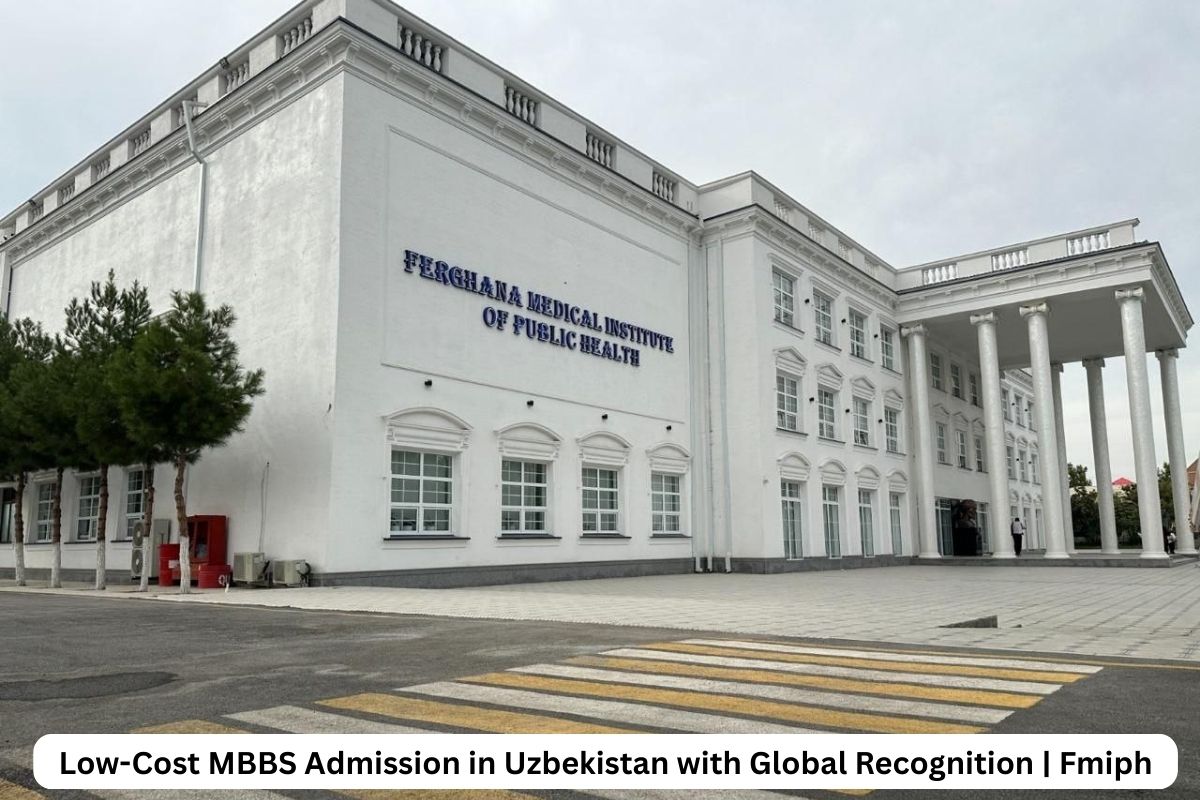
The northern part of the Fergana region is occupied by the Karakalpak and Yazyavan steppes, and is bounded on the south by a tributary of the Olay ridge. Fergana region is a high seismic zone. The climate is continental, the winters are mild, sometimes very cold. The average temperature in January is 3.2 C, in July – 28 C. The lowest temperature is 27.9 C. The maximum temperature is 42 C. Strong “Kokand wind” blowing in the west of the valley has a negative impact on the climate. In the south-east it blows summer wind. Annual precipitation ranges from 100 mm in the west (around Kokand) to 170 mm in the east, and up to 270 mm on the mountain slopes, mainly in the spring. Vegetation period is 210–240 days. The Syrdarya River flows along the north-western border of the region. Isfara, Sokh, Shohimardon, Isfayramsay start from the Alay ridge. The rivers are saturated with ice and snow. There are mainly gray soils and meadow-swamp soils, mostly hungry and typical gray soils on the hills, alluvial-meadow soils on the terraces of the Syrdarya, sandy and loamy meadows in the northern part of the region.
Fergana region is one of the centers of ancient culture of Uzbekistan. Pictures of Stone Age settlements and rocks found in the area, stone tools indicate that people have lived in the valley since ancient times. Excavation of the Greater Fergana Canal has played an important role in the study of archeological monuments of the region. During the excavation of the canal, monuments of the Bronze Age, slavery and landownership were found and examined. Finds from the 5th century BC and early Middle Ages in the city of Kuva are well researched. Historical sources from the 10th to the 11th centuries state that this city was the largest city in the valley after Akhsikat in terms of prosperity and size. Archaeological materials prove that the city of Margilan was a large village in the 10th century and took on the appearance of a village in the 11th-12th centuries.
The monuments found in the settlements of the Chust culture, which were engaged in sedentary farming and animal husbandry, are important in the study of the Fergana Valley. Archaeological excavations show that Fergana region has long been inhabited by people, engaged in hunting, farming, animal husbandry, and in the later stages of human society, culture began to develop.
Key Highlights
| Acronym | FMIPH |
| Established Year | 1992 |
| Located at | Fergana Uzbekistan |
| Type | Government |
| New NMC Gazette Compatible | Yes |
| Country Rank | 07 |
| World Rank | 3368 |
| Accreditation by | WHO, NMC, and medical council of other countries |
| Admission intakes | 2 Intakes (September & January) |
| Course duration | 6 year including Internship |
| Internship | 12 months internship at its own hospital |
| Medium of Teaching | Fully English Medium |
| Travelling time from Indian | 03hr 10m (Delhi to Tashkent) 30min (Tashkent to Fergana) |
Eligibility criteria for Fergana medical institute of Public health
To get admission to MBBS in Uzbekistan (Fergana medical institute of Public health) students need to fulfil the following criteria:
- Candidate must not be below 17 years of age
- Candidate must have scored 50% in 12th
- Reserved category candidates like OBC, SC, ST, he must have scored 40% marks in 12th with PCB.
- The primary subjects in 12th should be Physics, Chemistry, Biology
- The candidates should have cleared the NEET UG exam
- NEET scorecard should not be older than 3 years.